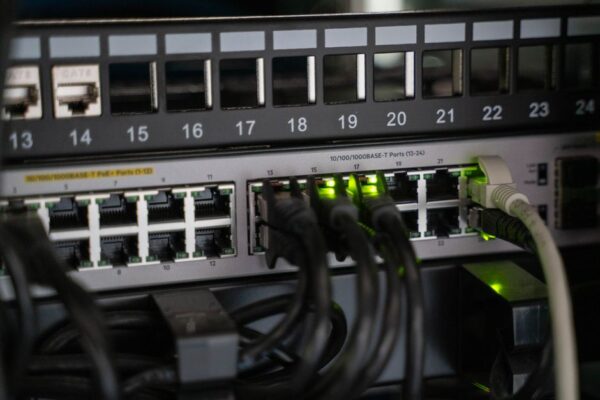
Modern perimeter defence relies on a firewall architecture that extends far beyond static access control lists. organisations running distributed workloads across hybrid cloud environments routinely encounter a critical failure mode: stateful inspection engines that were sized for baseline traffic profiles become overwhelmed during burst events, silently dropping legitimate packets while the underlying threat vectors evolve into encrypted channels that traditional layer-four policies simply cannot parse. This guide addresses the systematic construction of a firewall platform capable of handling high-throughput inspection, deep packet analysis, and zero-trust integration without introducing latency bottlenecks or operational blind spots.
Firewall Architecture Fundamentals for Modern Networks
A contemporary firewall is not a single appliance sitting at the network edge. It is a distributed enforcement plane comprising multiple inspection layers, each operating at a distinct point in the packet lifecycle. Understanding these layers and their operational characteristics is essential before committing capacity, licensing, or architectural decisions.
Packet Processing Pipeline
Every firewall implements a sequential processing pipeline that each packet must traverse. The order of operations directly determines both security efficacy and throughput ceiling:
- Hardware Pre-Processing: Network interface cards with dedicated crypto acceleration and checksum offloading handle physical layer duties before the packet reaches the main CPU.
- State Table Lookup: The engine consults its connection tracking table to determine whether the packet belongs to an established session. This step uses hash-based lookups and must complete in sub-microsecond intervals to maintain line-rate performance.
- Access Control Decision: Source, destination, service, and user identity are evaluated against the policy rulebase. Rule ordering is critical here—placing high-volume, frequently-matched rules at the top of the chain reduces average lookup depth.
- Application Layer Inspection: For traffic matching policies that require deep inspection, the engine extracts payload data, normalises protocol anomalies, and performs signature matching against threat databases.
- Security Profile Enforcement: Intrusion prevention, URL filtering, advanced malware detection, and data loss prevention policies are applied sequentially.
- Forwarding Decision: Routing and NAT transformations are finalised before the packet is transmitted to the egress interface.
Organisations that fail to model this pipeline during capacity planning consistently experience throughput degradation not at the physical interface level, but at stages four and five where CPU-bound inspection occurs. Specifying firewall hardware or virtual machine allocations purely on advertised throughput figures without understanding the inspection depth required by your traffic mix is a recurring engineering mistake.
Stateful vs Stateless Enforcement
Stateful inspection maintains a connection tracking table that records the state of every active session. This allows the engine to automatically permit return traffic for established connections without requiring symmetric rules in both directions. The state table is the single most critical data structure in any firewall engine. Its size, hash distribution quality, and the mechanism used for handling table exhaustion events directly determine operational stability under load.
When the state table reaches capacity, behaviour diverges sharply across platforms. Some firewalls silently drop new session requests with no logging. Others implement least-recently-used eviction algorithms that can prematurely terminate long-lived connections used by database replication or persistent API gateways. Understanding your specific platform’s state table behaviour under exhaustion is not optional—it is a prerequisite for production readiness.

Rulebase Design and Optimisation
A poorly structured rulebase is the most common source of both security gaps and performance degradation in firewall operations. The objective is to maintain a minimal, semantically precise policy set that can be audited, validated, and understood by any member of the engineering team.
Rule Minimisation Principles
Every rule in a firewall policy represents a decision point that consumes processing time and introduces attack surface. Apply the following principles during initial deployment and during periodic reviews:
- Consolidate overlapping rules: Rules with identical actions and overlapping object definitions should be merged into a single rule using address groups and service groups.
- Eliminate shadowed rules: A rule that appears after a broader rule with a matching or more permissive definition is never evaluated. Use your management platform’s shadow detection tools during every review cycle.
- Remove redundant any-to-any rules: Rules permitting all traffic to all destinations, often created during initial deployment or emergency change windows, negate the purpose of a restrictive policy. Audit and remove these immediately.
- Apply the principle of least privilege to services: Never permit a port range when a specific port number satisfies the requirement. Using
1-65535as the service definition is functionally equivalent to disabling inspection for that traffic.
Hit Count Analysis and Decommissioning
Mature firewall platforms maintain per-rule hit counters and timestamps of the last match. Establish a quarterly review process that identifies rules with zero hits over the preceding 90 days. Cross-reference these candidates with the application owners to confirm whether the traffic path is genuinely deprecated before removal. Documenting the decommissioning decision with a timestamp and responsible engineer creates an audit trail that satisfies compliance requirements and prevents reintroduction of the same rules during incident response.
Zoning Strategy
Segment your network into discrete security zones with explicit inter-zone policies. A typical enterprise deployment includes:
- Trust Zone: Internal user-facing networks requiring outbound internet access and access to internal services.
- DMZ: Public-facing services where traffic originates from untrusted sources. Apply strict inbound filtering and rate limiting.
- Data Zone: Database servers, storage arrays, and backend processing systems. Only permit traffic from explicitly authorised application servers.
- Management Zone: Infrastructure management networks where administrative access concentrates. This zone requires the most restrictive policies in the environment.
- Wireless Zone: Segmented from the trust zone with its own policy set controlling egress filtering, DNS restrictions, and client isolation.
Inter-zone traffic must be explicitly permitted. Default-deny between all zones, with explicit allow rules only for validated traffic flows, ensures that a compromise in one zone does not provide lateral movement paths to critical assets.

High Availability and Resilience Patterns
Single points of failure in the firewall layer cause complete site outages. Designing for resilience requires understanding the failure modes of your specific platform and implementing detection and failover mechanisms at the correct layer.
Active-Passive Clustering
The most common resilience pattern uses an active-passive cluster where the standby unit synchronises connection state from the primary and assumes the active role upon detecting a failure. State synchronisation is the critical variable here. Without synchronised state tables, the failover event causes mid-stream session disruption—any established TCP connection, VPN tunnel, or stateful protocol session will need to be re-established by the endpoint after failover.
For protocols with long-lived sessions, evaluate whether your applications tolerate this reconnection requirement. Database connection pools, for instance, may require explicit configuration for connection retry with exponential back off when they encounter a transport-level reset. Similarly, for detailed troubleshooting on the endpoint side, your teams may benefit from resources such as an everyday Windows troubleshooting guide for non-technical users when investigating connectivity failures that originate from client-side behaviour rather than infrastructure faults.
Active-Active Clustering
Active-active configurations distribute traffic across both cluster members, typically using link aggregation or policy-based routing. The complexity increases substantially because both units must maintain consistent state for bidirectional traffic. Hash-based load balancing, using source and destination IP tuples as the hash key, ensures that all packets for a given session traverse the same unit—preventing asymmetric routing that would cause state mismatches.
Test failover behaviour under realistic load before deploying active-active in production. Synthetic load generators that create thousands of concurrent sessions reveal state synchronisation bottlenecks that are invisible during low-traffic testing windows.
Health Monitoring and Failure Detection
Do not rely solely on the firewall’s built-in heartbeat mechanism. Implement external health checks from a load balancer or monitoring platform that validate end-to-end traffic forwarding capability. A firewall process crash may leave the heartbeat interface responsive while the forwarding plane is non-functional. ICMP ping to the management interface will not detect this condition. HTTP-based health probes that require actual traffic forwarding through the firewall provide genuine path validation.
Logging, Visibility, and Operational Intelligence
Firewall logs are the foundational data source for network security monitoring. However, raw firewall logs in their default configuration provide incomplete visibility and generate volumes that exceed the capacity of most SIEM ingestion pipelines.
Log Selectivity and Enrichment
Configuring every rule to log every session creates unsustainable log volumes. Implement selective logging:
- Log all denied traffic: Denied sessions indicate either misconfigured policies or genuine attack attempts. Both require visibility.
- Log security profile matches: Any traffic that triggers an IPS signature, URL category violation, or malware detection should be logged with the full payload metadata.
- Log high-risk permitted traffic: Traffic permitted to sensitive zones (data zone, management zone) should be logged regardless of whether it matches a threat. This creates an audit trail for compliance and incident investigation.
- Suppress logging for known high-volume permitted flows: Routine backup traffic, NTP synchronisation, and monitoring agent health checks generate massive log volumes without security value unless anomalous behaviour is detected.
Enrich firewall logs at the point of ingestion by resolving IP addresses to hostnames, user identities, and application names. Forwarding enriched logs to your SIEM reduces analyst investigation time significantly.
Integration with Centralised Security Platforms
Modern firewall platforms provide APIs and syslog forwarding mechanisms that integrate with broader security orchestration. Configure structured log forwarding using JSON or CEF formats to your centralised logging platform. When your infrastructure includes application workloads requiring performance monitoring and tuning, ensure that firewall logging granularity supports correlation with application-layer metrics. Refer to practical engineering guidance on optimising Node.js performance in production to understand how network-layer inspection overhead can affect application throughput benchmarks during load testing.
Zero-Trust Integration and Micro-Segmentation
The traditional perimeter-based firewall model assumes that internal traffic is inherently trusted. Zero-trust architectures eliminate this assumption by requiring authentication, authorisation, and continuous validation for every session regardless of its origin.
Identity-Based Policy Enforcement
Modern firewall platforms integrate with directory services to enforce policies based on user and group identity rather than source IP address alone. This eliminates the security gap created by IP address spoofing, DHCP reassignment, and mobile device movement between network segments.
Implementation requires reliable identity-to-IP mapping. Most platforms achieve this through agent-based collection on endpoints, integration with directory service authentication logs, or RADIUS accounting from network access devices. The identity mapping must be validated independently—a stale or incorrect mapping allows a user to inherit another user’s policy permissions.
Micro-Segmentation Patterns
Apply firewall enforcement at the workload level rather than the subnet level. In virtualised and containerised environments, each workload or pod can have its own policy ruleset that is migrated automatically when the workload moves between hosts. This requires tight integration between the firewall management platform and the orchestration layer.
Key micro-segregation rules:
- Database workloads accept connections only from explicitly authorised application server identities.
- CI/CD pipeline systems do not have unrestricted access to production environments. Pipeline egress to production is mediated through a controlled deployment gateway with audit logging.
- Workloads in non-production environments are denied access to production data stores entirely, preventing accidental data exposure during testing.
Performance Engineering and Capacity Planning
Firewall performance must be characterised under realistic traffic conditions, not under the idealised benchmarks published by vendors. Throughput ratings assume specific packet sizes, session rates, and inspection profiles that rarely match production workloads.
Throughput Testing Methodology
Use tools such as iPerf3 or dedicated traffic generators to characterise throughput across the following dimensions:
- TCP throughput with no inspection: Establishes the baseline hardware ceiling for forwarding performance.
- TCP throughput with IPS enabled: Quantifies the inspection overhead imposed by signature matching. Expect 30-60% throughput reduction depending on the number of active signatures and the traffic’s protocol diversity.
- TCP throughput with SSL decryption: Decryption is the most CPU-intensive inspection function. Measure the impact across your organisation’s typical TLS versions and cipher suites.
- UDP throughput at target packet rates: Small-packet UDP workloads (DNS, VoIP, telemetry) stress the packet processing pipeline differently than bulk TCP transfers. Specify new-session rates independently of throughput rates.
SSL/TLS Decryption Strategy
Encrypted traffic now represents the majority of enterprise network flows. A firewall that cannot inspect encrypted traffic is blind to the threats within it. However, decrypting all traffic indiscriminately creates both performance challenges and operational issues.
Implement a tiered decryption policy:
- Full decryption: Apply to all outbound user traffic to external destinations. This requires deploying internal certificate authorities and configuring trusted root certificates on all managed endpoints.
- Selective decryption: Decrypt inbound traffic to DMZ-hosted services where the firewall terminates the TLS connection and re-encrypts to the backend. This provides inspection without requiring endpoint certificate changes.
- Exemptions: Financial services, healthcare APIs, and specific business-critical SaaS platforms may specify certificate pinning that conflicts with interception. Maintain a documented exemption list reviewed quarterly rather than exempting entire IP ranges wholesale.
Sizing Formula for Virtual Firewalls
When deploying virtual firewall instances, allocate resources based on the inspection workload rather than the raw throughput requirement:
- Base allocation: 4 vCPUs and 8 GB RAM for the control plane and basic forwarding.
- Add 1 vCPU per 1 Gbps of throughput requiring IPS inspection.
- Add 2 vCPUs when SSL decryption is enabled for more than 50% of traffic volume.
- Sessions per second: Add 2 GB RAM per 100,000 concurrent sessions expected.
These ratios are approximate and platform-dependent. Validate against your specific platform vendor’s sizing documentation, which for major vendors is available through their official technical resources at learn.microsoft.com or equivalent vendor documentation portals.
Operational Maintenance and Governance
Firewall infrastructure degrades in security effectiveness over time if operational discipline lapses. Establish and enforce maintenance procedures that prevent policy drift and ensure continuous compliance.
Configuration Management
- Version control all configurations: Store firewall configuration files in a Git repository. Every change, including emergency modifications, must be committed with a descriptive message and the engineer’s identity.
- Automate configuration backups: Schedule daily automated backups to an off-platform storage location. Verify backup integrity weekly by performing a test restore on a lab instance.
- Implement change review workflows: Require peer review for all policy modifications. No single engineer should be able to commit a rule change without review, even during incident response. Post-incident reviews can occur after restoration, but the review must still happen.
Patch Management
Firewall firmware and signature database updates must be applied on a defined cadence. Vendor-critical security patches should be applied within 72 hours of release. Feature releases should follow a staged deployment:
- Deploy to the lab environment and execute your standard regression test suite.
- Deploy to non-production environments and monitor for 48 hours.
- Deploy to the passive cluster member in production and perform manual failover testing.
- Deploy to the active cluster member during a planned maintenance window.
Compliance Validation
Run automated policy audit tools quarterly to identify rules that violate your organisation’s security standards. Common violations include rules permitting excessive port ranges, rules with overly broad source or destination definitions, and rules lacking associated security profiles. Produce a compliance report for each quarterly review and retain records for a minimum of 12 months to satisfy audit requirements.
Common Deployment Pitfalls
Throughout thousands of enterprise deployments, certain failure patterns recur with predictable regularity. Recognising these patterns prevents costly remediation efforts post-deployment.
- Asymmetric routing: Return traffic bypasses the firewall because the default route on the internal network points directly to the core switch rather than through the firewall. Verify routing on all devices in the path, not just the firewall itself.
- MTU mismatches: VPN tunnels, tunnel interfaces, and VLAN trunks introduce additional headers that reduce effective MTU. If the firewall does not account for path MTU discovery, fragmented packets will be dropped silently. Set explicit MTU values on all tunnel interfaces matching the path constraints.
- NAT reflection failures: Users on the internal network attempting to access DMZ services via the public IP address require NAT hairpinning or split DNS. Without this configuration, internal users cannot resolve or reach the service. This is not a firewall bug—it is a design requirement that must be addressed explicitly.
- Time synchronisation failures: Certificate validation, log correlation, and stateful failover all depend on accurate time. Deploy NTP to all firewall management and data planes. Verify time synchronisation after every firmware upgrade.
Summary
A firewall is an active, dynamic component of your security architecture that requires ongoing engineering attention. Architecture decisions made during initial deployment—clustering patterns, policy structure, inspection depth, and logging strategy—determine the operational ceiling for years. Invest in understanding the packet processing pipeline, enforce rule minimisation and identity-based policies from the outset, design for failover with external health validation, and treat firewall configuration as code subject to version control and peer review. These practices, applied consistently, produce a platform that scales with the organisation while maintaining security efficacy against evolving threats.